If your walls have started telling on your plumbing with pinhole leaks, rusty water, or pressure that drops when two fixtures run at once, repiping stops being a future project and becomes a real decision. For many Central Florida property owners, copper versus PEX repiping is the question that matters most because the right material affects cost, disruption, longevity, and day-to-day peace of mind.
Copper versus PEX repiping: what changes from one choice to the other?
Both copper and PEX can solve the core problem of aging, failing pipes. The difference is how they get there and what trade-offs come with each one.
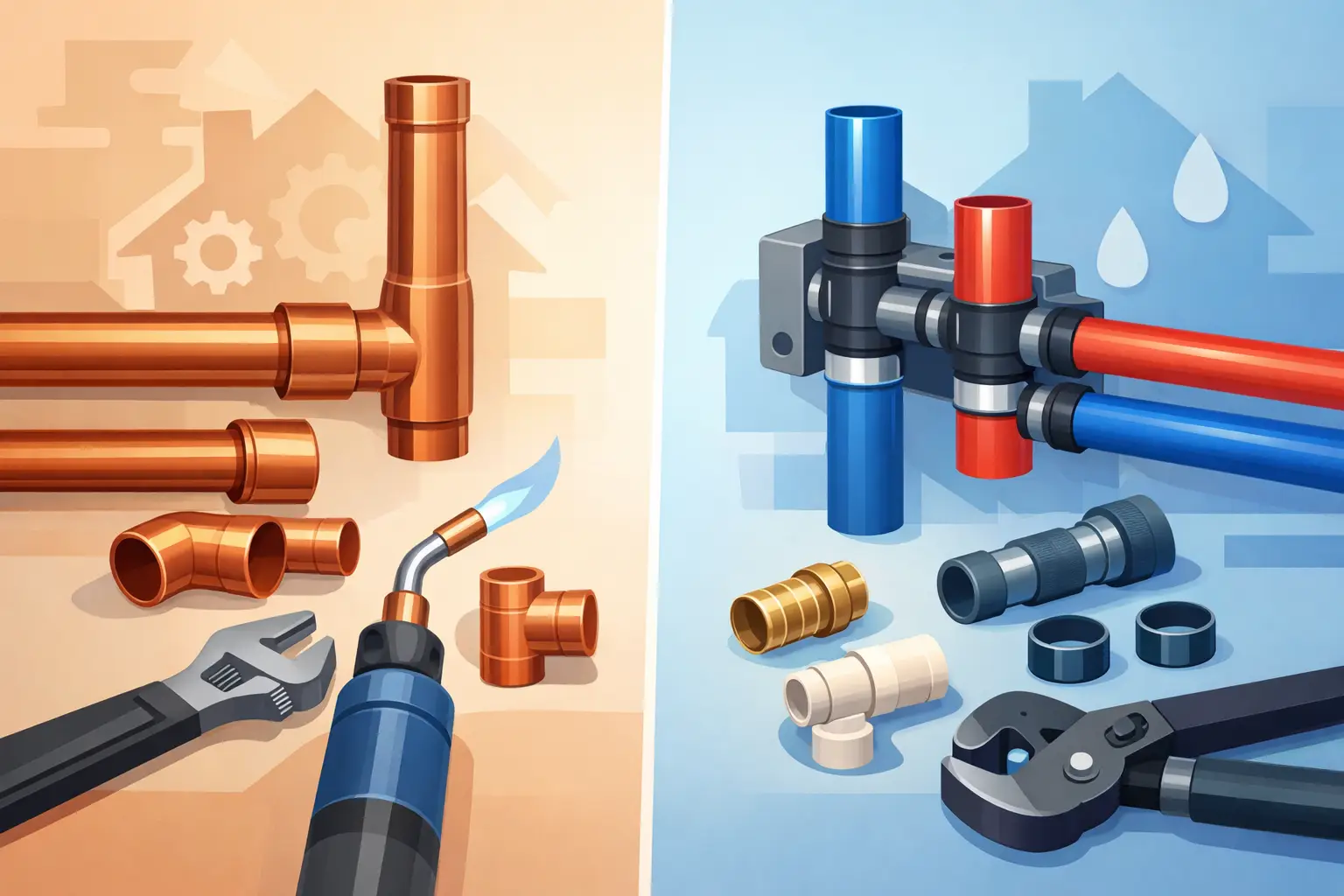
Copper is a metal pipe that has been used for decades in residential and commercial plumbing. It has a long track record, handles heat well, and is still viewed by many owners as a premium option. PEX, short for cross-linked polyethylene, is a flexible plastic piping material that has become a popular repiping choice because it installs faster, usually costs less, and adapts well to modern repipe methods.
From the customer side, the biggest differences usually come down to budget, installation time, how invasive the work will be, and the condition of the specific property. A newer home with accessible wall cavities may present one set of options. An older property with recurring slab leaks or hard-to-reach pipe runs may point in another direction.
Why homes and buildings end up needing repiping
Repiping is rarely the first repair someone wants to hear about, but there are times when patching the system over and over stops making financial sense. If leaks keep appearing in different parts of the property, that pattern matters. So do discolored water, poor pressure, visible corrosion, and plumbing that has simply reached the end of its useful life.
In Central Florida, water conditions and age can both play a role. Some systems deal with mineral-heavy water for years, and that wear adds up. A single repair might fix one section, but if the rest of the piping is in similar condition, more failures often follow.
That is why a proper inspection matters before anyone recommends copper or PEX. The material is important, but so is the layout of the system, the number of fixtures, whether the property is occupied during work, and how much access the plumber has behind walls or above ceilings.
Where copper still makes a strong case
Copper has a reputation for durability for a reason. It is rigid, proven, and widely accepted in many applications. If you want a piping material with a long history and strong heat resistance, copper remains a solid option.
It also appeals to owners who prefer traditional materials and want a repipe that feels close to what many higher-end plumbing systems used for years. In some commercial settings or specific code-driven situations, copper may also fit the job requirements or owner preference better.
There are practical upsides beyond perception. Copper does not sag the way unsupported flexible piping might if installed poorly, and it performs well under high temperatures. When installed correctly by a licensed plumber, it can offer reliable long-term service.
But copper is not the automatic winner just because it has been around longer. Material cost is usually higher, labor is often more involved, and installation can require more wall access than a flexible system. In a repipe, that can mean a higher project price and more disruption inside the property.
Why PEX has become a go-to repiping material
PEX is often the practical answer when speed, efficiency, and cost control matter. Because it is flexible, plumbers can snake it through walls and around obstacles with fewer fittings and less demolition in many homes. That can shorten the timeline and help reduce how invasive the repipe feels.
For occupied homes, that matters. Property owners want the job done correctly, but they also want as little interruption as possible. PEX can often support that goal better than more rigid pipe materials.
PEX also tends to be more budget-friendly than copper on both material and labor. That does not mean it is a shortcut or a lesser repair. It means the installation process is usually more efficient, which can make full repiping more realistic for homeowners and landlords who need a long-term solution without the higher cost of metal piping.
Another benefit is its resistance to scale buildup and corrosion. In systems where older metal piping has suffered from internal deterioration, PEX can offer a cleaner reset.
Copper versus PEX repiping on cost, lifespan, and disruption
This is where most decisions are made.
If cost is the top concern, PEX usually has the advantage. The material itself is generally less expensive, and the labor is often faster. For many homeowners, that makes it the first option they consider. For rental properties or multi-unit buildings where budget and turnaround time matter, PEX often makes even more sense.
If lifespan and long-term confidence are your priority, both materials can perform well when properly installed. Copper has a longer public track record, which gives some owners added confidence. PEX has also proven itself in many repiping applications, especially when installed under the right conditions and matched to the property correctly.
If minimizing wall cuts and jobsite disruption matters most, PEX often comes out ahead. Its flexibility allows for more routing options, which can reduce the amount of opening and patching required. That can be a major advantage in finished homes, tenant-occupied spaces, and businesses trying to stay operational.
Still, no material should be chosen by price alone. The cheapest option on paper is not always the best fit if your system has unique demands, local code considerations, or water conditions that deserve a closer look.
Water quality, heat, and property type all matter
A good repipe recommendation is never one-size-fits-all. Water quality can affect pipe performance over time. The number of bathrooms, fixture locations, and whether the property is slab-on-grade can all influence which material is more practical.
Hot water distribution matters too. Copper handles heat extremely well, which keeps it in the conversation for certain applications. PEX also works well in hot and cold water systems, but the system design, support, and installation details need to be handled correctly.
Property type can change the recommendation. A single-family home with easy attic access may be a strong candidate for PEX. A building owner who prefers metal piping or has a system designed around specific commercial needs may lean toward copper. The right answer depends on the property, not just the product.
What a professional repipe evaluation should tell you
A trustworthy plumbing company should not jump straight to selling one material. They should inspect the existing system, explain what is failing, and walk you through why a certain repiping approach fits your property.
You should expect clear communication about the scope of work, how long water may be off, what areas of the home or building will be accessed, and what restoration work is part of the plan. You should also get transparent pricing and a clear explanation of whether spot repairs are still reasonable or whether full repiping is the smarter investment.
That decision-making process matters just as much as the material itself. A good repipe is not only about replacing pipes. It is about solving recurring plumbing issues with a system that is built for the property and installed correctly the first time.
So which one is better?
For many homes, PEX is the better practical choice because it is cost-effective, efficient to install, and less disruptive during repiping. For some owners, copper remains worth the higher investment because they value its history, rigidity, and traditional performance profile.
That is why the best answer to copper versus PEX repiping is not a blanket statement. It depends on your plumbing layout, your budget, the age and condition of the current system, and how much disruption you can tolerate during the project.
If you are already seeing repeated leaks or signs of widespread pipe failure, waiting usually makes the decision more expensive. The next leak may show up in a wall, under flooring, or at the worst possible time. A qualified plumber can inspect the system, explain the options in plain language, and help you choose the repipe that fits your property for the long run.
The right repipe should leave you with fewer surprises, more reliable water service, and one less thing to worry about every time you turn on a faucet.