A hidden leak rarely stays hidden for long. What starts as a faint musty smell under a sink or a small spike in your water bill can turn into warped flooring, stained drywall, mold growth, or structural damage before you know it. If you are trying to figure out how to find hidden plumbing leaks, the goal is not just spotting water. It is catching the source early enough to limit repair costs and protect your property.
Some leaks announce themselves with obvious puddles. Others show up in ways that are easier to dismiss, especially in homes and commercial spaces where pipes run behind walls, under slabs, in ceilings, or through crawl spaces. The challenge is knowing which signs matter and when a basic check is enough versus when you need a licensed plumber with leak detection equipment.
How to Find Hidden Plumbing Leaks in Your Home
Start with the simplest clue – water use that does not make sense. If your monthly bill climbs without a clear reason, or if you hear water running when every fixture is off, there is a good chance water is escaping somewhere it should not.
Your water meter can help confirm that suspicion. Turn off all faucets, appliances, irrigation, and anything else that uses water. Then check the meter and make note of the reading. Wait 30 minutes to an hour without using any water, then check it again. If the reading changes, you likely have a leak. This test does not tell you where the leak is, but it is one of the fastest ways to confirm that a hidden problem exists.
From there, pay attention to where your home is acting differently. Plumbing leaks often leave indirect evidence before they create visible damage. A room that smells damp, paint that bubbles, or flooring that feels slightly warm or soft can all point to a concealed pipe issue.
Watch for the most common warning signs
Stains on ceilings or walls are a major red flag, especially if they grow, darken, or return after repainting. Flooring that buckles, laminate that lifts, and tile grout that stays damp can also signal moisture below the surface. In some cases, you may notice a section of wall that feels cooler than the surrounding area, which can happen when water is collecting behind it.
Mold and mildew matter too, especially if they keep returning even after cleaning. If the smell is strongest inside a cabinet, near a water heater, behind a washing machine, or in a bathroom wall shared with plumbing lines, that is worth investigating.
Low water pressure can also be part of the picture. It does not always mean a hidden leak, because buildup, valve issues, and municipal supply problems can cause the same symptom. But if low pressure shows up along with higher bills or moisture damage, a leak becomes more likely.
Room-by-Room Leak Checks That Actually Help
A practical inspection works best when you move through the property one area at a time. That keeps you from missing a smaller clue because you are focused only on obvious plumbing fixtures.
Kitchen
Look under the sink first. Check the shutoff valves, drain connections, garbage disposal, dishwasher line, and the cabinet floor. Even a slow leak can leave swelling, staining, or a sour smell. Pull appliances forward if possible and inspect behind the dishwasher and refrigerator water line connection.
Bathrooms
Bathrooms hide leaks well because moisture is expected there. Check around toilet bases for movement, staining, or soft flooring. Open vanity cabinets and look for dampness around supply lines and drain traps. Pay attention to caulk lines around tubs and showers too. Not every bathroom leak is a pipe leak. Sometimes water escapes through failed seals and damages the surrounding structure.
Laundry area
Washing machine hoses, drain lines, and supply valves are common leak points. If the wall behind the machine shows discoloration or the floor nearby feels soft, do not ignore it. Small hose leaks can stay hidden for a long time.
Water heater and utility areas
Inspect the area around your water heater, shutoff valves, and exposed piping. Corrosion, dripping fittings, rust trails, or moisture around the base can point to a leak. If you hear a hiss or a faint trickle in this area, it is worth taking seriously.
Ceilings, walls, and floors
If a leak is on an upper floor, the signs may appear below it. A ceiling stain under a bathroom, kitchen, or laundry room often means water is traveling before it becomes visible. Follow the plumbing layout as best you can. The wet spot is not always directly under the leak source, but it usually puts you in the right area.
When the Leak May Be Under the Slab or Underground
Some of the most expensive water damage starts where you cannot see the pipe at all. In Central Florida, slab leaks are a real concern, and the signs can be subtle at first.
Warm spots on the floor, unexplained moisture along baseboards, cracks in flooring, mildew without an obvious source, or the sound of running water can all point to a leak below the slab. If your meter test shows water movement and you cannot find evidence inside walls or around fixtures, the leak may be under the home or somewhere in the main water line.
Outdoor leaks can be just as easy to miss. Soggy patches in the yard, unusually green grass in one area, erosion near the foundation, or standing water when it has not rained may indicate a buried line problem. These leaks often waste a significant amount of water before they are found.
Tools That Can Help – and Their Limits
Homeowners can do a lot with a flashlight, paper towels, and patience. A moisture meter or infrared thermometer may also help narrow down suspicious areas, especially behind walls or under flooring. Food coloring in a toilet tank is another easy test. If color appears in the bowl without flushing, the toilet has a slow leak.
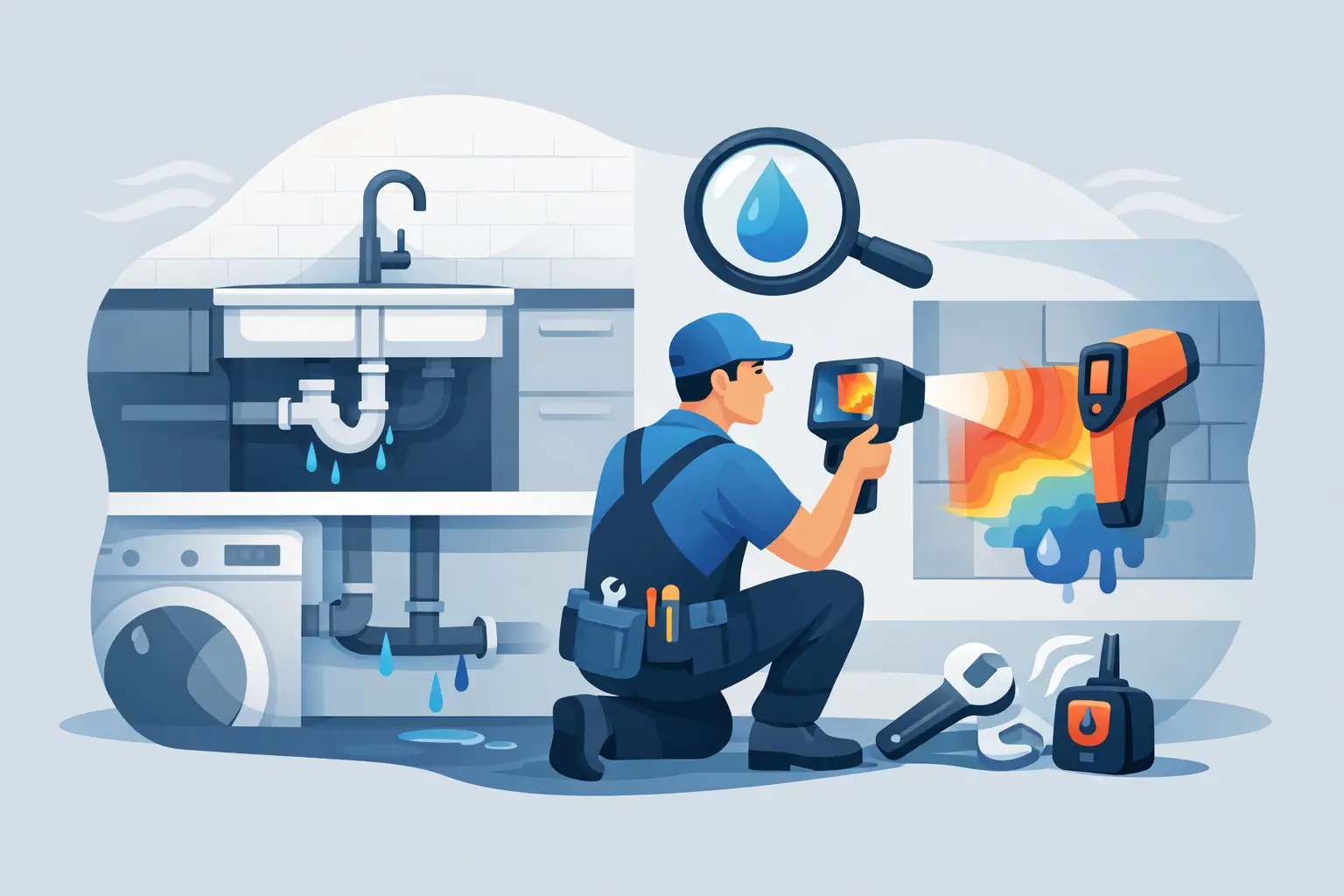
But there is a point where DIY stops being cost-effective. Cutting into drywall without enough evidence can create unnecessary repairs. The same goes for digging in the yard or pulling up flooring based on a guess. Professional leak detection uses tools such as acoustic listening devices, pressure testing, thermal imaging, and line tracing to locate hidden leaks with far less disruption.
That matters because the real cost of a plumbing leak is not just the pipe repair. It is also the drywall, flooring, cabinetry, insulation, and downtime that can follow if the leak is misdiagnosed or left in place too long.
When to Call a Professional Plumber
If your water meter indicates a leak and you cannot identify the source quickly, it is time to bring in a licensed plumber. The same goes for ceiling stains, recurring mold, slab leak warning signs, or any leak affecting electrical areas, commercial spaces, or multiple units.
An experienced plumber can also tell the difference between a plumbing leak and another moisture issue. Roof leaks, HVAC condensation, groundwater intrusion, and appliance problems can mimic plumbing damage. Accurate diagnosis saves time and prevents unnecessary work.
For property managers and business owners, speed matters even more. Hidden leaks in restrooms, break rooms, tenant spaces, or utility lines can affect operations, create liability, and damage finishes before occupants report a problem. Fast inspection and a clear estimate make a big difference when you are trying to minimize disruption.
How to Reduce the Risk of Hidden Plumbing Leaks
Not every leak is preventable, but regular attention helps. Check exposed supply lines and shutoff valves a few times a year. Replace old washing machine hoses before they fail. Watch your water bill for sudden changes. If you own an older home or manage multiple properties, periodic plumbing inspections are a smart investment.
It also helps to act early instead of waiting for certainty. Many people hesitate because the signs seem minor. A faint odor, a small stain, or a modest bill increase does not always feel urgent. But plumbing leaks tend to get worse, not better. The earlier you investigate, the more options you usually have.
If something feels off, trust that instinct. A reliable plumbing company should be able to inspect the issue, explain what they find, and give you a clear next step without making the process harder than it needs to be. That is the standard The Flush Club believes in, and it is often what keeps a small leak from becoming a major repair.
The best time to look for a hidden leak is when the signs first show up, not after the damage spreads. A quick check today can save you from a much bigger repair tomorrow.