No hot water usually shows up at the worst time – right before work, before guests arrive, or in the middle of a busy day at your property. If you’re searching for how to relight gas water heater systems safely, the good news is that many pilot light issues are straightforward. The key is knowing when a simple relight is appropriate and when the problem points to a larger gas, venting, or water heater failure that needs professional attention.
Before You Relight a Gas Water Heater
Start with safety, not the control knob. A gas water heater uses an open flame, a gas supply, and combustion venting. If you smell gas strongly, hear hissing, or notice scorch marks, soot, or melted components around the unit, stop immediately. Do not try to relight it. Leave the area, avoid using electrical switches nearby, and call for qualified help.
If there is no strong gas smell and the area looks normal, check the basics. Make sure the gas supply valve to the water heater is open. Look at the water heater’s access panel and find the control valve, which is usually labeled Off, Pilot, and On. Many modern units also have a built-in igniter button, while older models may require a long lighter. Your owner’s instructions matter here because ignition steps can vary slightly by manufacturer.
It also helps to confirm that the pilot is actually out. Some newer sealed combustion units make this harder to see, but many standard models have a small viewing window near the burner chamber. If no flame is visible, a relight may be the next step.
How to Relight Gas Water Heater Units Step by Step
The safest approach is slow and deliberate. Rushing is what causes missed steps.
First, turn the gas control knob to Off. Wait at least five minutes before doing anything else. This gives any unburned gas inside the chamber time to clear. If you still smell gas after the wait, do not continue.
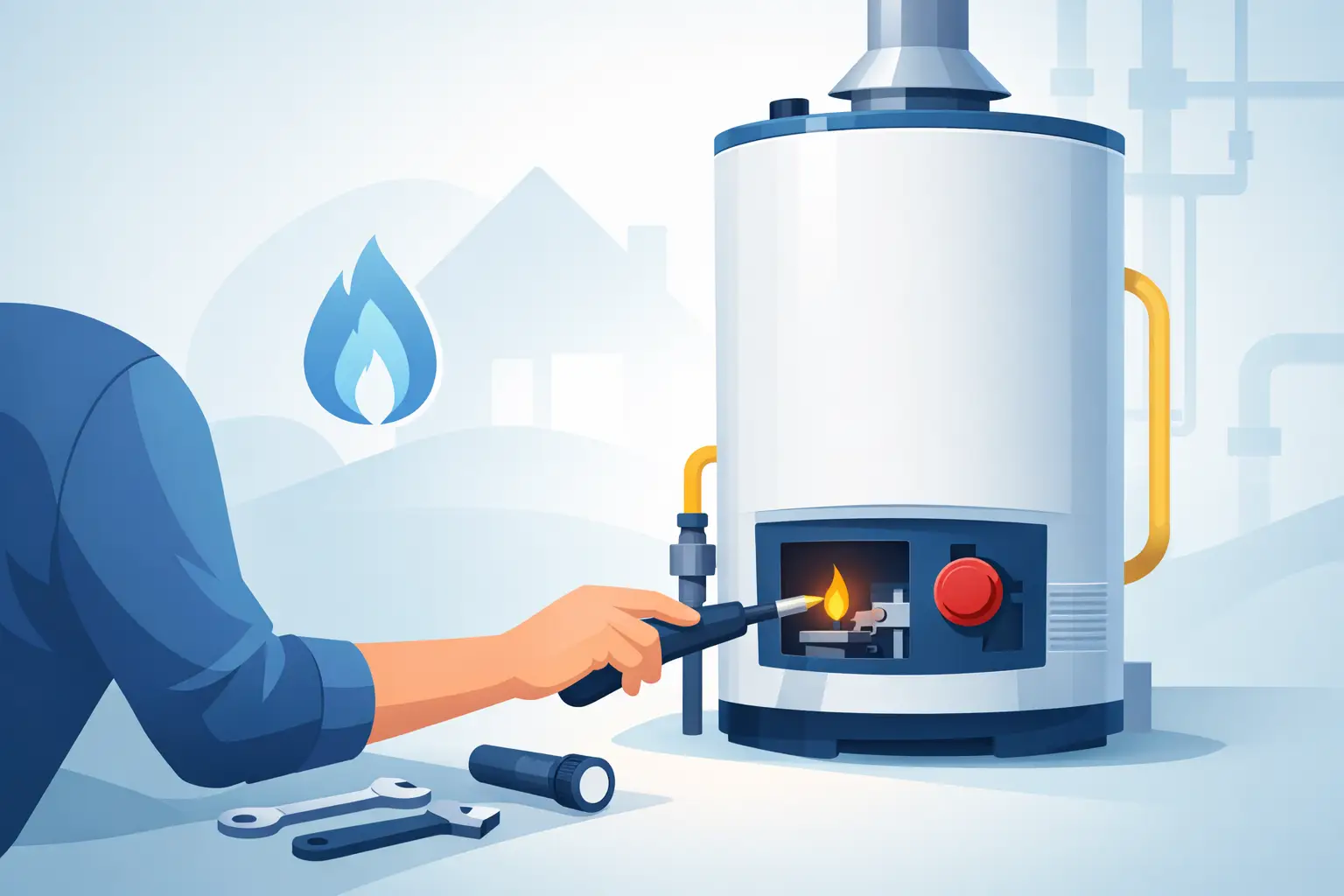
Next, turn the knob to Pilot. Press and hold the pilot button or the control knob itself, depending on the model. This starts gas flow to the pilot assembly. While holding it down, press the igniter button repeatedly until you see the pilot flame through the viewing window. On older heaters without a push-button igniter, you may need to light the pilot manually exactly as the manufacturer directs.
Once the pilot lights, keep holding the button for 30 to 60 seconds. This gives the thermocouple or flame sensor time to recognize the flame. Then release the button slowly. If the flame stays lit, turn the control knob from Pilot to On. Set the temperature to your preferred setting, which is often around 120 degrees for most households.
Replace any access covers you removed and give the heater a little time. The burner may kick on shortly after the thermostat calls for heat, but it can still take a while for the tank to recover and produce fully hot water.
When the Pilot Won’t Stay Lit
This is where a simple relight becomes a diagnosis issue. If the pilot lights and then goes out as soon as you release the button, the problem may not be the pilot itself.
A common cause is a failing thermocouple or thermopile. This safety component senses the pilot flame and tells the gas valve it’s safe to stay open. If it’s dirty, worn out, or misaligned, the gas valve shuts back down. In some cases, gently cleaning the component helps. In many others, it needs replacement.
Dirty pilot tubes and burner assemblies can also interfere with ignition. Dust, lint, and debris are especially common in garages, utility closets, and commercial spaces where airflow carries particles into the unit. If the pilot flame looks weak, yellow, or inconsistent instead of strong and blue, cleaning or repair may be needed.
Then there is the gas control valve itself. If the valve is malfunctioning, the water heater may not hold the pilot or may fail to send gas correctly. That is not a part most property owners should guess on, especially when gas is involved.
Why a Pilot Light Goes Out in the First Place
Sometimes a pilot outage is a one-time event. Other times, it is a warning sign.
A draft can blow out an older pilot flame, especially if the heater is installed in an area with poor shielding or changing airflow. Venting problems can also affect combustion. If the flue is blocked or drafting improperly, the heater may shut down for safety or burn inconsistently.
Moisture, corrosion, and age play a role too. An older tank water heater may relight today and fail again next week because the underlying components are wearing out. If your unit is nearing the end of its service life, repeated pilot problems often mean repair costs are starting to stack up.
There is also a difference between a random outage and repeated failure. If you have relit the heater more than once in a short period, treat that as a repair issue, not routine maintenance.
A Few Mistakes to Avoid
If you’re figuring out how to relight gas water heater equipment for the first time, avoid improvising. Do not skip the five-minute wait after turning the control to Off. Do not keep feeding gas into the chamber if the flame does not catch. And do not remove panels that are part of a sealed combustion design unless your manufacturer specifically allows it.
Another common mistake is turning the temperature too high after relighting. Higher settings do not create hot water faster in a useful way, but they do raise scalding risk and can increase stress on an older unit.
It is also worth saying clearly – if the unit has electronic ignition and no standing pilot, the troubleshooting process is different. Many newer gas water heaters do not use the same manual relight method as older tank models. If you are unsure what type you have, pause and identify the model before continuing.
When to Call a Plumber Instead
Some situations are not worth troubleshooting on your own. If the water heater will not relight, will not stay lit, smells like gas, shows soot around the burner, or keeps shutting down, bring in a licensed plumbing professional. The same goes for any unit with visible corrosion at the gas control, water leaks around the base, or signs of improper venting.
For landlords and property managers, the decision point is even simpler. If hot water service affects tenants or business operations, a quick professional diagnosis usually saves time, reduces repeat complaints, and lowers the risk of making a gas appliance issue worse.
In Central Florida, where homes and commercial properties rely on dependable hot water year-round, fast response matters. A company like The Flush Club can inspect the water heater, confirm whether the issue is the pilot assembly, thermocouple, gas control valve, burner, or venting, and give you a clear repair-versus-replacement recommendation.
Repair or Replace? It Depends on the Water Heater
Not every pilot problem means you need a new unit. If the heater is fairly new and the issue is isolated to a thermocouple, igniter, or minor burner cleaning, repair is often the practical option.
If the tank is older, leaking, rusted, or having multiple performance issues at once, replacement may be the better investment. That is especially true if you are already dealing with inconsistent hot water, rising energy bills, or repeated service calls. Spending money to relight and repair a failing heater can buy very little time.
A professional inspection helps separate a quick fix from a temporary patch. That matters because gas water heaters are not just about comfort. They involve combustion safety, reliable operation, and code-compliant installation.
A Safe Relight Starts With Good Judgment
Knowing how to relight gas water heater systems can help you restore hot water quickly when the pilot has simply gone out. But the safest approach is not just following the steps. It is recognizing when the problem is bigger than a relight.
If the flame is unstable, the pilot will not hold, or anything about the unit feels off, trust that instinct and stop there. Hot water should be reliable, and gas appliance issues should be handled with care. A quick check today can prevent a bigger repair, a longer outage, or a serious safety problem tomorrow.