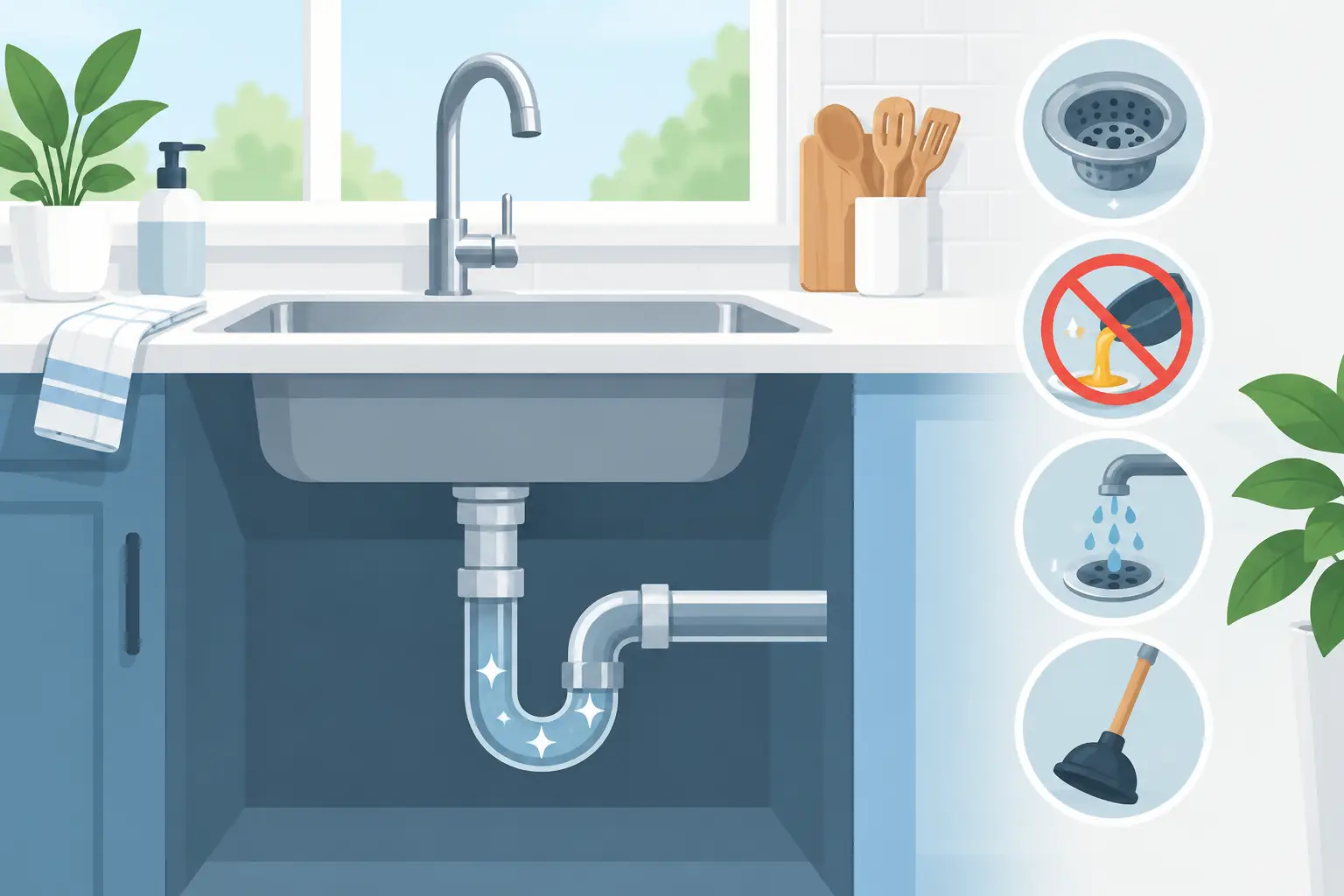
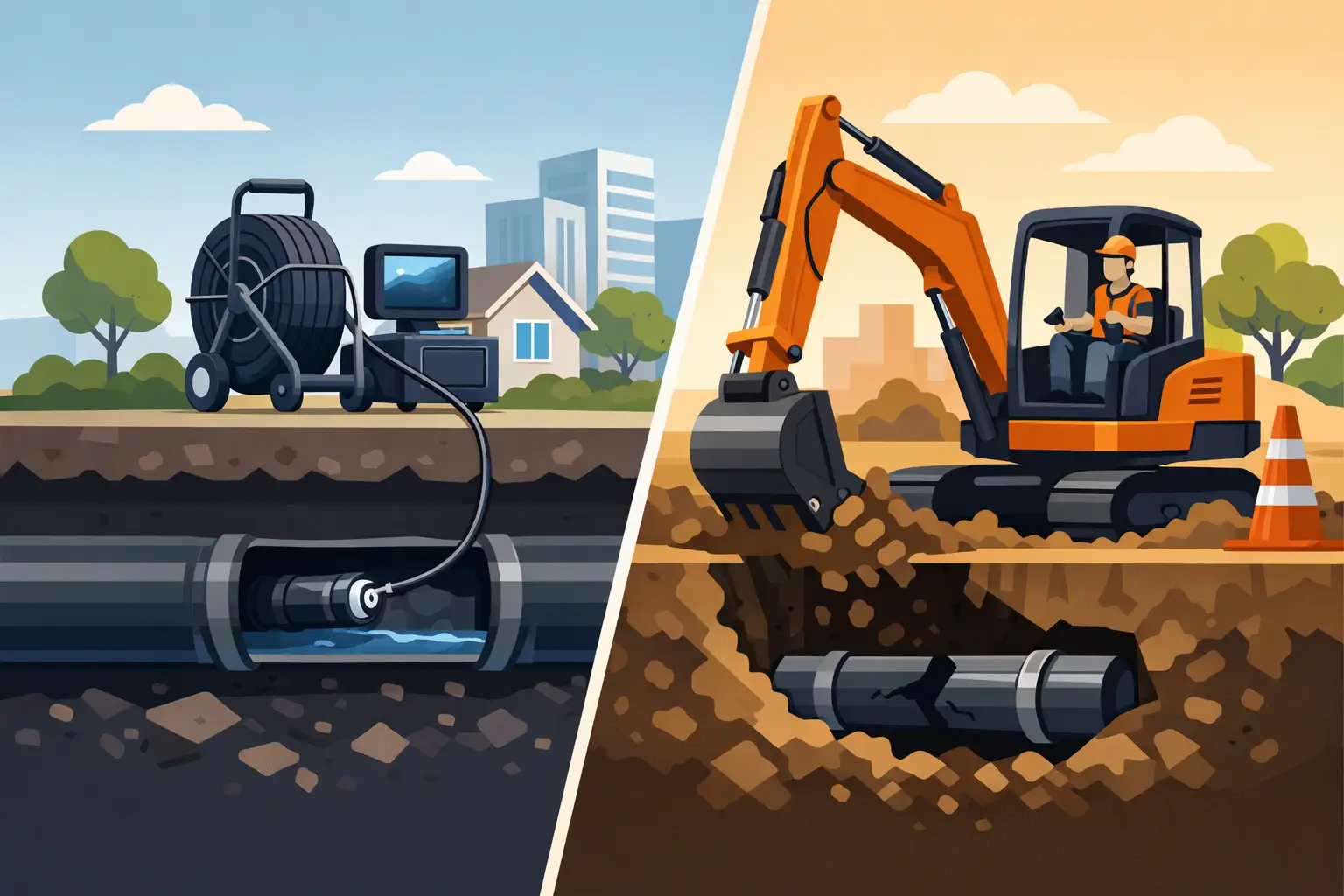
A sewer backup, recurring drain clog, or wet patch in the yard can make homeowners assume the worst: the yard will need to be dug up. In many cases, the choice between sewer camera versus excavation starts with a simpler question: Do we know exactly what is wrong and where it is? A professional camera inspection often provides that answer without disturbing a single section of landscaping, flooring, or driveway.
For Central Florida homes and commercial properties, the right approach depends on the pipe’s condition, the location of the failure, and whether a repair is actually needed. A camera is a diagnostic tool. Excavation is a repair method. They are not interchangeable, and choosing the right order can prevent unnecessary cost and disruption.
What a Sewer Camera Inspection Can Tell You
A sewer camera inspection uses a small, waterproof camera attached to a flexible cable. A licensed plumber feeds it through an accessible cleanout or drain line and watches a live video feed as the camera travels through the pipe. This gives the technician a direct view of the line’s interior instead of relying on symptoms alone.
The inspection can reveal common causes of sewer trouble, including root intrusion, grease buildup, scale, cracked pipe sections, separated joints, bellies that hold standing water, and collapsed areas. It can also identify an object lodged in the line or show whether an older pipe material is deteriorating from the inside.
Just as important, the camera helps locate the issue. A transmitter in the camera head can help pinpoint its position from above ground. That information matters when a repair is needed. Instead of excavating a broad area based on a best guess, the repair can be planned around the actual problem location.
For a homeowner dealing with slow drains, the benefit is clarity. For a property manager or business owner, it can mean less downtime and better documentation when planning repairs across multiple units or facilities.
Sewer Camera Versus Excavation: The Real Difference
A sewer camera inspection is usually the first step when the problem is unknown. It is minimally invasive, fast, and designed to diagnose the condition of an existing pipe. It does not repair broken pipe, remove major structural damage, or correct a line that has lost its slope.
Excavation means opening the ground, slab, wall, or other structure to access the damaged pipe. It is necessary when the pipe needs to be replaced, reconnected, re-sloped, or repaired in a location that cannot be addressed with a trenchless option. Excavation is more involved because it includes access work, repair work, and restoration of the affected area.
The key point is simple: excavation is not automatically the better or more complete response. Digging before diagnosing can lead to unnecessary damage, especially if the clog or break is farther down the line than expected. A camera inspection helps make sure the repair plan fits the actual condition of the sewer line.
There are exceptions. If a pipe has already collapsed and caused an active sewage backup, or if there is a visible sinkhole or severe ground movement, immediate excavation may be part of the emergency response. Even then, camera footage can often help define the full extent of the issue before repair work begins.
When a Camera Inspection Is Usually the Right First Move
A camera inspection makes sense when drains are repeatedly clogging, sewage is backing up, or a sewer line has been cleared but the same problem keeps returning. Clearing a blockage may restore flow for the moment, but it does not explain why the blockage formed. If roots, a cracked joint, or a sagging pipe are involved, the problem may return until the underlying issue is addressed.
It is also useful before buying a home, after major plumbing work, or when managing an older property with unknown sewer line history. Many Central Florida properties have mature trees, shifting soil, and aging underground piping. Those conditions can create sewer issues that are not visible from inside the home.
A camera is especially valuable when the goal is to avoid unnecessary digging. If the footage shows a localized buildup that can be removed through drain cleaning, there may be no need for excavation. If it reveals a suitable candidate for trenchless sewer repair, the property may avoid the disruption of a traditional open trench.
When Excavation May Be Necessary
Excavation becomes the practical choice when the pipe has structural damage that cannot be restored from inside the line. A fully collapsed sewer pipe, severely offset sections, extensive pipe deterioration, or a line installed with incorrect slope may require direct access and replacement.
The location matters as much as the damage. A broken pipe under an open lawn is usually easier to access than one beneath a driveway, pool deck, mature landscaping, or building slab. However, easy access does not mean excavation should happen without a clear diagnosis. The repair area should be as targeted as possible.
Excavation may also be required when local code requirements, pipe depth, utility conflicts, or the condition of connecting lines make a trenchless repair unsuitable. An experienced plumber should explain why digging is recommended, what area will be affected, what repair will be performed, and what restoration is included or excluded from the estimate.
A trustworthy recommendation should never be based on pressure or vague language. You deserve to know whether the proposed work repairs one damaged section, replaces the full line, or addresses a recurring issue that could spread to other areas of the pipe.
Cost Is More Than the Price of Digging
Homeowners often compare a camera inspection and excavation as if they are competing services with similar goals. They are not. The cost of a camera inspection is generally far lower because it is diagnostic and non-destructive. The cost of excavation varies widely based on depth, pipe length, soil conditions, access, materials, permits, and restoration needs.
The more useful comparison is the cost of informed repair versus the cost of guessing. If a camera shows that a clog is isolated and removable, excavation could be unnecessary. If it confirms a collapsed section, the camera provides the evidence needed to move forward with repair confidently.
Keep in mind that restoration can be a significant part of excavation costs. Replacing sod is different from removing and repairing concrete, pavers, fencing, landscaping, or portions of a structure. Ask for a clear, written estimate that separates diagnosis, repair scope, and restoration expectations.
Could Trenchless Repair Be a Middle Option?
Sometimes the decision is not strictly camera or excavation. After camera inspection, a plumber may determine that trenchless sewer repair is possible. Depending on the type and location of damage, methods such as pipe lining or pipe bursting can repair or replace sections of sewer pipe with much less surface disruption than conventional digging.
Trenchless methods are not right for every line. A pipe that is badly collapsed, severely misaligned, or inaccessible for equipment may still need excavation. But when conditions are right, trenchless repair can protect landscaping, reduce restoration work, and shorten the disruption to a home or business.
The camera inspection is what makes this decision practical. It shows whether the existing pipe can support a trenchless solution and helps the plumber identify the best access points.
Questions to Ask Before Approving Sewer Work
Before authorizing excavation, ask what the camera inspection found, where the damage is located, and whether the footage supports a localized repair or full replacement. Ask whether trenchless repair is an option and what factors rule it in or out.
You should also ask how the line will be located, what parts of the property may be affected, whether permits are needed, and how the work area will be restored. For commercial properties, clarify expected downtime, access restrictions, and how the repair will affect tenants, customers, or daily operations.
A professional plumbing team should be able to answer these questions in plain language. The Flush Club focuses on inspecting first, explaining the findings clearly, and providing upfront repair options so customers can make informed decisions without unnecessary surprises.
Act Before a Small Sewer Problem Becomes a Property Problem
A recurring sewer issue rarely fixes itself. Waiting can turn a manageable blockage or isolated crack into interior water damage, sewage exposure, damaged landscaping, or a more complicated repair. If drains keep slowing down, toilets bubble, wastewater backs up, or you notice persistent sewer odors, schedule an inspection before the problem forces an emergency decision.
The best next step is not automatically a camera or a shovel. It is an accurate diagnosis from a licensed plumbing professional who can show you what is happening underground and recommend the least disruptive repair that will hold up over time.