
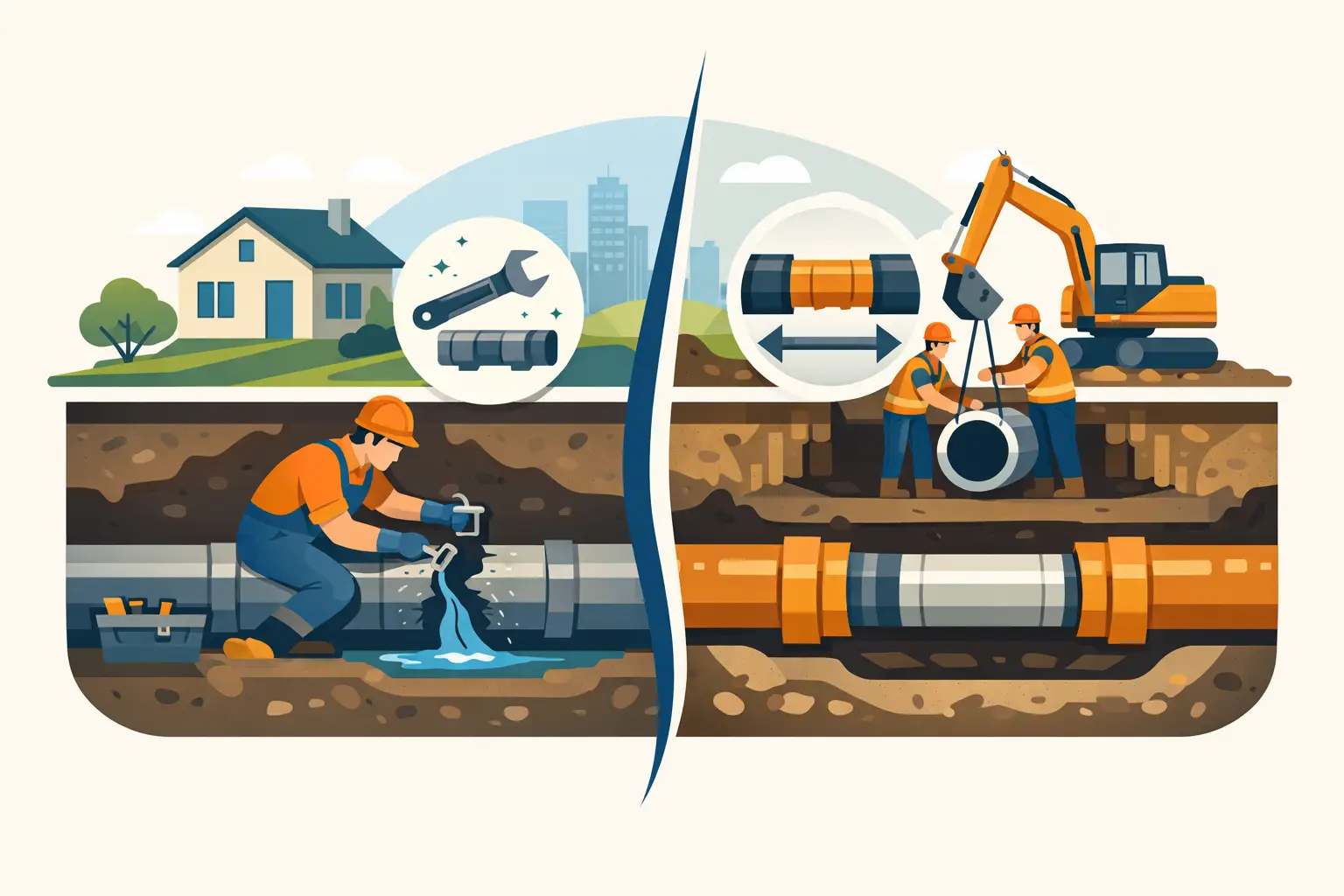
A sewer problem rarely starts with a dramatic collapse. More often, it begins with a slow drain that keeps coming back, a foul smell near the yard, or a backup that happens at the worst possible time. When that inspection report lands in your hands, the next question is usually the hard one: sewer repair vs replacement. The right answer depends on what is actually happening underground, how extensive the damage is, and whether a quick fix will truly hold up.
How to think about sewer repair vs replacement
For most property owners, the decision is not really about choosing the cheaper option today. It is about choosing the option that solves the problem without setting you up for another emergency a few months from now.
Sewer repair usually makes sense when the issue is isolated. That could mean a small crack, a joint separation in one section, or a blockage caused by roots entering a specific point in the line. If the rest of the pipe is in solid condition, a targeted repair can restore function without the cost and disruption of replacing the full line.
Replacement is usually the better move when the pipe has widespread wear, repeated failures, severe corrosion, bellied sections, or major structural damage. In those cases, fixing one spot may only delay the next breakdown. A full replacement often costs more upfront, but it can be the more reliable and cost-effective choice over time.
What a professional inspection should tell you
Before anyone recommends a repair or a replacement, the line should be properly inspected. A camera inspection gives a real view of the pipe interior instead of relying on guesswork. That matters because sewer symptoms often look the same from the surface, even when the underlying causes are very different.
A good inspection should identify where the problem is, how long the damaged section runs, what material the sewer line is made from, and whether the pipe is still structurally sound overall. It should also show whether the issue is from roots, grease buildup, corrosion, offset joints, shifting soil, or a collapsed section.
This is also where clear pricing and honest guidance matter. If the line has one localized problem, a repair may be all you need. If the camera shows multiple weak spots along an aging pipe, replacement is usually the safer recommendation.
When sewer repair is the smarter choice
Repair is often the right call when the damage is limited and the rest of the line has life left in it. That is especially true for newer sewer lines or systems that have had one specific problem rather than a long history of backups.
A spot repair can work well if there is a single crack, a broken connection, a small section affected by root intrusion, or a clog that caused damage in one contained area. In some cases, trenchless methods can address that damaged portion with less disruption to the yard, driveway, or landscaping.
The biggest benefit of repair is obvious: lower immediate cost. It is also faster in many situations, which matters if you need to get a home or business back to normal quickly. For landlords and small business owners, minimizing downtime can be just as important as managing the invoice.
The trade-off is that repair only solves the part you fix. If the pipe is old, brittle, or failing in several areas, one repair may turn into two, then three. That is where short-term savings can disappear.
When replacement is worth it
Replacement tends to be the better investment when the sewer line is at the end of its service life or the damage is too extensive for a reliable patch. Older cast iron, Orangeburg, clay, or deteriorated PVC lines can all reach a point where repairs become harder to justify.
If your property has had recurring backups, multiple repair attempts, or ongoing root intrusion, a full replacement may be the option that finally ends the cycle. The same is true if the pipe has collapsed, sags badly, or shows widespread cracking and corrosion throughout the line.
Replacement also makes more sense when you are dealing with a property that needs a long-term solution rather than a temporary fix. Homeowners planning to stay put, landlords protecting rental reliability, and commercial property operators trying to avoid service interruptions often benefit from handling the full issue at once.
Yes, replacement usually costs more upfront. But it also resets the condition of the sewer system, reduces the chance of recurring emergencies, and can prevent repeated excavation and repair bills later.
Cost is important, but it is not the whole decision
It is natural to focus on price first. Sewer work is not usually a planned expense, and no one wants to pay for more than they need. But sewer line decisions should be based on value, not just ticket price.
A lower-cost repair is the right answer if it truly fixes the problem for the long run. It is the wrong answer if it buys only a short window before the next backup. On the other hand, a full replacement can feel like a bigger leap, but it may save money if the existing line is already failing in several places.
Several factors affect cost beyond the type of work itself. Depth of the line, pipe material, accessibility, whether the line runs under concrete, how much excavation is required, and whether trenchless sewer repair is possible all influence the final number.
That is why a transparent estimate matters. You should know what is damaged, what is being recommended, and why.
Trenchless changes the conversation
Years ago, replacement usually meant major digging from the house to the street. Today, trenchless options can reduce surface disruption in many cases. That does not mean every sewer line qualifies, but when it does, the difference can be significant.
Trenchless repair or replacement may be a good fit when access points can be used and the existing line path supports the method. For properties with mature landscaping, driveways, patios, or limited access, that can make replacement more practical than people expect.
It is still not a one-size-fits-all answer. Some lines are too damaged or too misaligned for trenchless methods, and excavation is sometimes still necessary. But if you are comparing sewer repair vs replacement, it is worth asking whether trenchless technology changes the cost or disruption enough to shift the decision.
Signs you may be past the repair stage
Some sewer problems clearly point toward replacement. If backups keep returning after cleanings, if the yard stays wet near the sewer route, or if the inspection shows widespread deterioration, patching one area may not be enough.
Frequent drain issues across multiple fixtures are another warning sign. When toilets, tubs, and sinks start acting up together, the problem is often deeper than a routine clog. Property age also matters. If the sewer line is decades old and made from materials known to fail over time, replacement becomes more reasonable even if one section looks like the main trouble spot today.
For commercial properties, there is an added concern: operational risk. A restaurant, office, retail space, or multi-unit building can lose time and money quickly when sewer issues keep resurfacing. In those cases, reliability carries extra weight.
The best decision is the one backed by evidence
No reputable plumbing company should push replacement when a repair will do the job. And no property owner should be steered toward a small repair when the line is clearly worn out. The right decision comes from inspection results, not guesswork, and from balancing present cost against future risk.
In Central Florida, shifting soil, root intrusion, aging infrastructure, and sudden heavy water loads can all affect sewer lines. That is why local experience matters. A team that handles sewer diagnostics, repair, and replacement regularly can explain not just what is wrong, but what is likely to happen next if you choose one path over the other.
If you are facing this decision now, focus on the condition of the full line, not just the immediate symptom. A trustworthy plumber will walk you through the findings, explain the trade-offs, and give you a clear estimate before work begins. That kind of guidance is what turns a stressful sewer issue into a smart, manageable next step.