
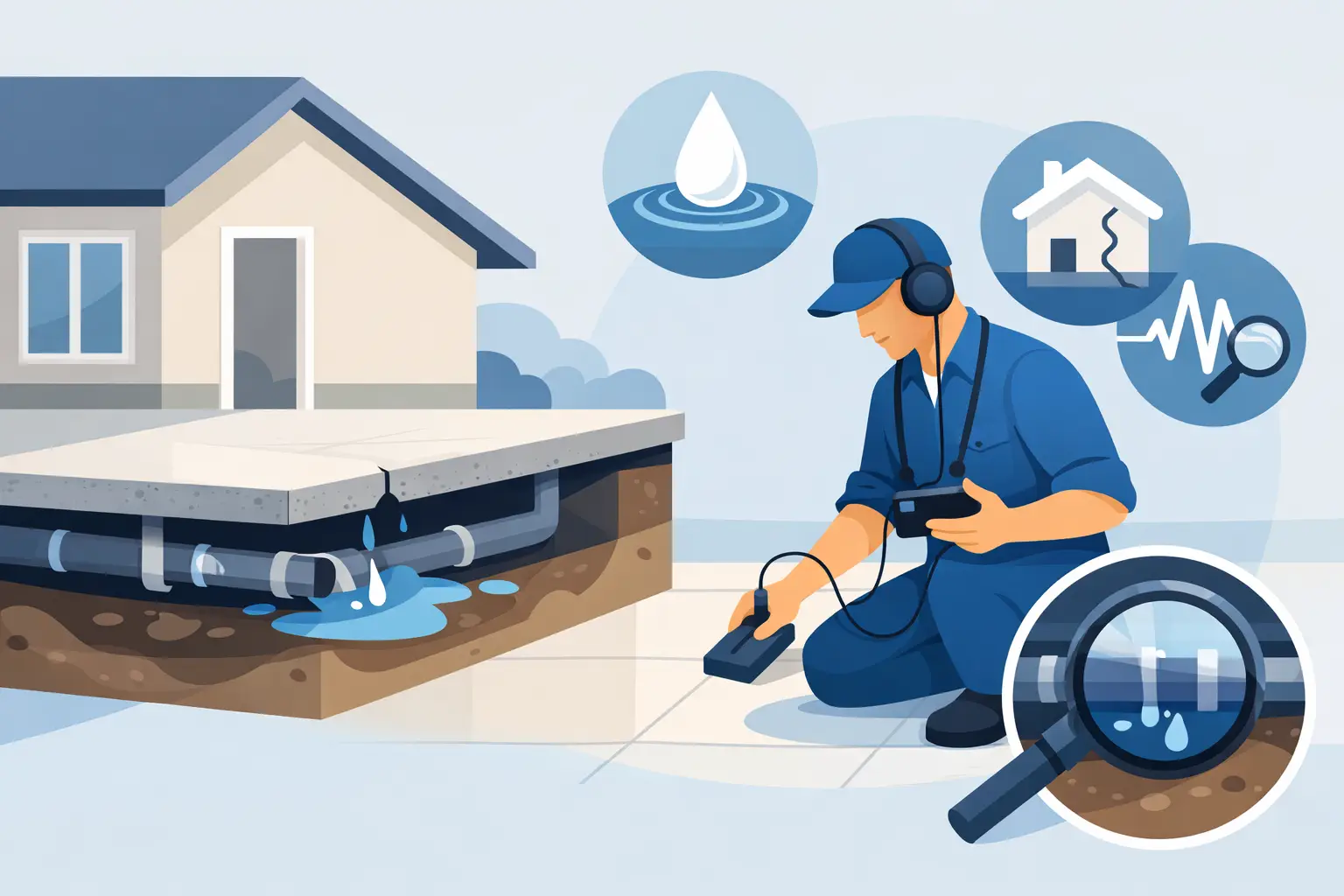
A warm spot on the floor. A water bill that suddenly jumps. The faint sound of running water when every fixture is off. Those are the kinds of clues that often lead homeowners and property managers to search for a slab leak detection service – and for good reason. A leak under your foundation is easy to miss at first, but it can turn into expensive damage if it sits too long.
In Central Florida, where heat, soil movement, aging plumbing, and high water use can all play a role, slab leaks are not something to brush off. The challenge is that the pipe is hidden beneath concrete, so guessing is not enough. You need a clear inspection, an honest explanation of what is happening, and a repair plan that makes sense for the property.
What a slab leak actually means
A slab leak is a leak in a water line or drain line located beneath the concrete foundation of a home or commercial building. These leaks can be small and slow, or they can break open enough to cause serious water loss in a short time. Either way, the real problem is not just the leaking pipe. It is what that water can do to flooring, walls, cabinets, and the slab itself over time.
Not every hidden leak is a slab leak, and that matters. Water can also travel from a wall line, an attic line, or an exterior pipe and show up where it does not seem to belong. That is why proper detection comes first. A good plumber does not start by tearing up floors. They start by confirming where the leak is and whether it is truly under the slab.
Signs you may need a slab leak detection service
Some slab leaks announce themselves quickly. Others show up as a collection of small warning signs that are easy to overlook until the damage spreads.
You may notice hot spots on the floor, damp carpet, warped flooring, mildew odors, or cracks in the flooring or walls. Some customers first spot the problem because their water heater seems to run more often than normal. Others find out when the utility bill rises for no clear reason.
One of the most common signs is hearing water movement when the building is quiet and no fixtures are in use. In commercial spaces, unexplained moisture, recurring flooring issues, or water pressure changes can also point to a concealed line problem below the slab.
It depends on the size and location of the leak, though. A very small leak may not create visible puddling right away. A larger break may lead to obvious moisture and foundation-related concerns faster. That range is exactly why fast testing matters.
How a professional slab leak detection service works
The goal of detection is simple: find the leak with as little disruption as possible. The process usually starts with questions about what you have seen, heard, and paid for recently in water usage. After that, a licensed plumber will inspect the plumbing system and begin narrowing down the source.
Pressure testing and system isolation
One of the first steps is often pressure testing. This helps confirm whether a water line is losing pressure somewhere in the system. If needed, the plumber may isolate sections of piping to determine whether the leak is on the hot water side, cold water side, or another part of the plumbing network.
This matters because the repair approach can change depending on which line is affected. A hot water line under a kitchen area may call for a different plan than a cold water line under a hallway or a drain issue under a bathroom.
Acoustic listening equipment
Many slab leaks are found using specialized listening devices that help plumbers hear the sound of water escaping under concrete. This can be especially useful when the leak is active but not visible on the surface.
Acoustic detection is helpful, but it is not magic. Flooring type, ambient noise, and leak size can affect how clearly the leak presents itself. In a quiet residential setting, results may come faster. In a busy commercial property, the process may take more time and cross-checking.
Thermal and moisture detection
Temperature differences and moisture readings can also help identify hidden leak zones, especially with hot water slab leaks. Warm areas under flooring may suggest where a line is failing. Moisture detection tools can help map the spread and confirm whether water is collecting in areas that support the diagnosis.
The best slab leak detection service does not rely on one tool alone. It combines testing methods to avoid guesswork and reduce unnecessary cutting or demolition.
Why fast detection saves money
A slab leak is one of those plumbing issues that can look minor from the surface while causing major damage below. The longer it runs, the more likely it is to affect flooring materials, baseboards, drywall, cabinetry, and in some cases the foundation stability around the leak area.
There is also the cost of wasted water. Even a pinhole leak can add up over time. If the leak is on a pressurized line, your plumbing system may be working harder than it should, which puts more strain on related components.
For landlords and property managers, delay can also lead to tenant complaints, downtime between occupants, and more expensive restoration work. For business owners, hidden moisture can interrupt operations and create sanitation concerns depending on the space.
Repair options after the leak is found
Finding the leak is only part of the job. Once the location is confirmed, the next step is choosing the right repair. This is where an experienced plumber should explain the trade-offs clearly.
Spot repair
If the leak is isolated and the surrounding pipe is in good condition, a direct repair at the leak location may be the most practical option. This can be cost-effective when the issue appears to be limited to one damaged section.
The trade-off is that spot repair addresses the current failure, not necessarily the age or condition of the rest of the line. If the pipe is older or has had repeated issues, another leak could develop later.
Rerouting or repiping
In some cases, it makes more sense to reroute the line above ground or through a different path rather than open the slab and repair the pipe in place. If multiple slab leaks have occurred or the piping material is showing broader wear, partial or full repiping may be the more reliable long-term solution.
This usually costs more upfront, but it can reduce the chance of repeated slab access and repeated repairs. For many property owners, the best choice comes down to the age of the plumbing, the leak history, and the value of preventing future disruption.
What to expect from a reliable plumbing company
When you call for slab leak help, speed matters, but so does process. You want a plumber who explains what they are testing, what they found, and what the next step will cost before repair work begins.
A dependable company should provide a clear inspection, a straightforward estimate, and practical options based on your property. If the situation is urgent, they should be ready to respond quickly. That matters in Central Florida, where hidden water damage can escalate fast in heat and humidity.
This is also one of those jobs where experience counts. Slab leak detection is not the place for trial and error. The right team knows how to confirm the problem, protect the property as much as possible, and recommend a repair that fits both the plumbing condition and the customer’s budget.
For homeowners and businesses that need fast, honest service, companies like The Flush Club focus on quick response, transparent pricing, and lasting repairs instead of short-term patchwork.
When to call now instead of waiting
If you have active moisture, a sudden spike in your water bill, reduced water pressure, or signs of water movement under the floor, it is smart to call right away. The same goes for unexplained mold odors, warm flooring, or visible cracking that seems to be getting worse alongside plumbing symptoms.
You do not need to diagnose the leak yourself before making the call. In fact, waiting for more proof often gives the leak more time to cause damage. A professional slab leak detection service is there to answer the real question quickly: is the leak under the slab, and what is the smartest way to fix it?
The best next step is usually the simplest one – get the issue checked before a hidden leak becomes a structural repair, a flooring replacement, and a much bigger bill all at once.