If your tap water leaves spots on glass, dries out your skin, stains fixtures, or carries a chlorine smell every time you shower, whole house water filtration system installation starts to look less like an upgrade and more like a practical fix. In Central Florida, water quality can vary from one property to the next, and the right setup depends on what is actually coming through your lines. That is why a good installation is not just about adding a filter tank – it is about matching the system to the water, the plumbing, and the demands of the building.
What a whole-house system actually does
A whole-house filtration system treats water as it enters your home or commercial property. That means filtered water reaches showers, sinks, laundry, and in many cases the water heater and connected appliances. Unlike a small under-sink unit, it is built to improve water quality across the entire plumbing system.
What it removes depends on the equipment installed. Some systems are designed to reduce sediment, chlorine, and common taste and odor issues. Others are built to address iron, sulfur, tannins, or other water conditions that show up in well water and some municipal supplies. In some properties, filtration is paired with water softening because those are two different jobs. Filtration targets contaminants and water quality concerns. Softening targets hardness minerals like calcium and magnesium.
That distinction matters because many property owners assume one tank handles everything. Sometimes it can, but often the best result comes from a combination of treatment stages.
When whole house water filtration system installation makes sense
There are obvious signs, like cloudy water, sediment in tubs, rotten-egg odor, scale buildup, or dry skin after bathing. But not every problem announces itself that clearly. Some customers start looking into filtration because appliances are aging too quickly, water heaters are filling with sediment, or tenants are complaining about taste and odor.
For homeowners, a properly selected system can improve daily comfort and help reduce wear on plumbing fixtures. For landlords and property managers, it can cut down on maintenance complaints tied to water quality. For small businesses, especially those with restrooms, break areas, or customer-facing sinks, it supports a cleaner and more consistent experience.
It also makes sense when you are already investing in other plumbing work. If you are replacing a water heater, updating supply lines, or fixing recurring fixture issues, that can be the right time to evaluate incoming water quality and decide whether filtration belongs in the plan.
Why testing comes first
The biggest mistake in whole house water filtration system installation is choosing equipment before identifying the actual water problem. A system that works well for one home may be the wrong fit for the property next door.
Municipal water and well water bring very different challenges. City water often raises concerns about chlorine, sediment, and taste. Well water may involve iron, sulfur, manganese, acidity, or bacterial concerns. In Florida, local conditions can change the recommendation quickly.
That is why testing matters. It helps determine whether you need a sediment pre-filter, carbon filtration, a neutralizer, a softener, a UV component, or a more specialized setup. It also helps avoid overspending on equipment that does not solve the issue. A clear inspection and estimate process should explain what the water is doing now, what equipment is being recommended, and why.
Where the system gets installed
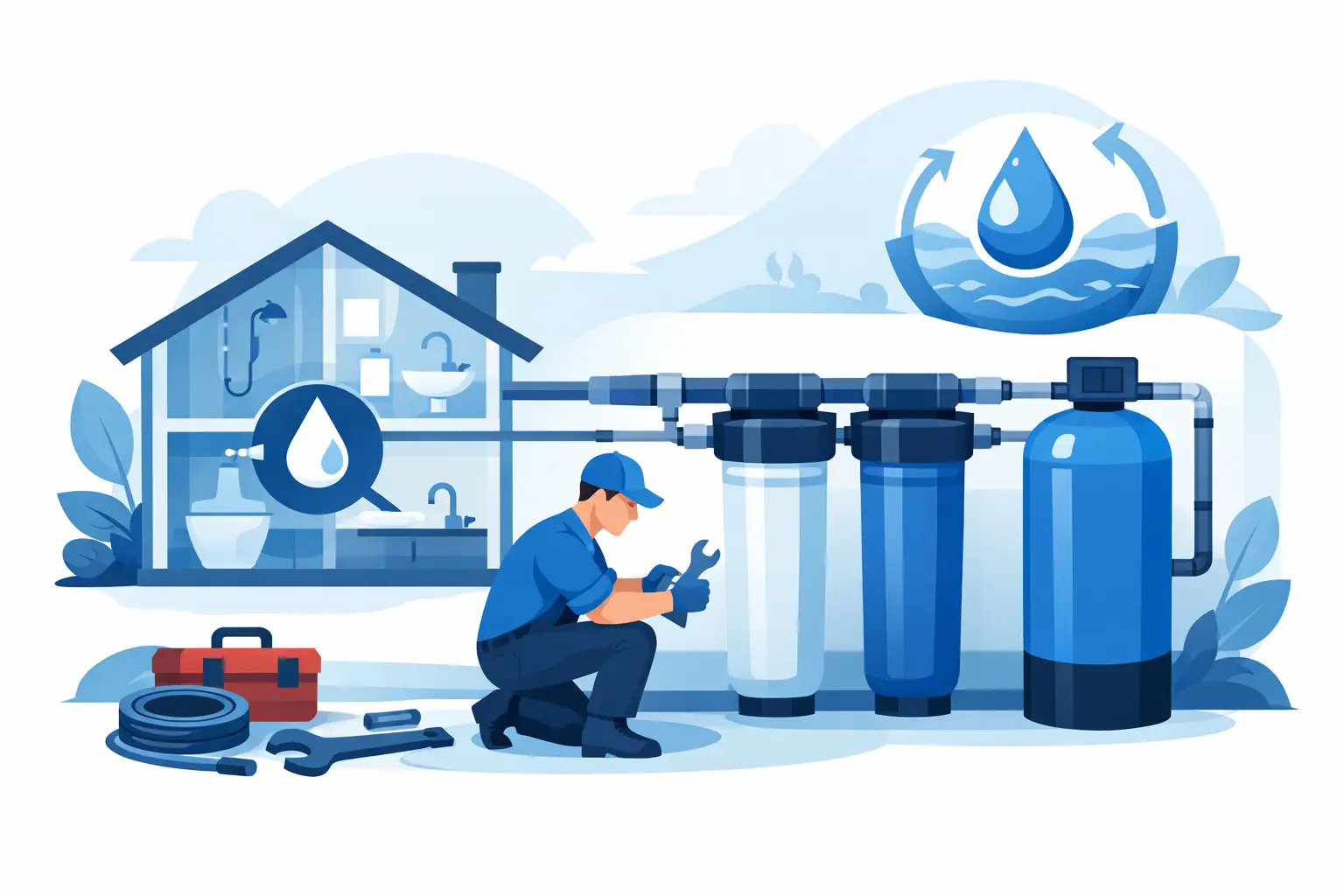
Most whole-house systems are installed near the main water line where water enters the property. That location allows the system to treat water before it branches off to the rest of the building. The installer also needs enough room for the tanks, shutoff access, service clearances, and in some cases a drain connection for backwashing equipment.
Placement is not only about convenience. It affects serviceability, freeze protection where relevant, and how well the system integrates with existing plumbing. In garages, utility rooms, and mechanical areas, layout can usually be managed without much trouble. In tighter spaces or older buildings, installation may require more planning.
This is one reason professional installation matters. A system should not block access to shutoffs, create awkward pipe routing, or get squeezed into a spot that makes future maintenance harder than it needs to be.
What happens during installation
A professional whole house water filtration system installation usually starts with shutting off the main water supply and identifying the best tie-in point. From there, the plumbing is modified to add the filtration equipment, along with bypass valves and isolation valves where appropriate. Those features matter because they make future maintenance and troubleshooting much easier.
Depending on the system, the installer may add a sediment filter, a carbon tank, a softener, a control valve, or multiple treatment stages in sequence. If the setup includes backwashing or regeneration, it may also require a drain line and power connection. After the equipment is connected, the system is tested for leaks, pressure performance, and proper flow.
A good installer will also walk you through what has been installed, how often filters or media need service, and what normal operation should look like. If that conversation is skipped, you are left guessing later when maintenance comes due.
Cost depends on more than the equipment
Customers often ask for a simple price, but the true cost depends on the water issue, the size of the property, and the plumbing conditions at the installation point. A basic sediment and carbon setup will cost less than a multi-stage system built for well water with iron, odor, and hardness concerns.
Labor can also vary. If the main water line is easy to access and there is plenty of room to work, installation is more straightforward. If the line is in a tight mechanical space, the piping is outdated, or electrical and drain connections must be added, the job becomes more involved.
The cheapest option is not always the best value. A lower-cost system that is undersized or poorly matched to the water can lead to weak flow, constant maintenance, or disappointing results. Paying for the correct system once is usually less expensive than replacing the wrong one later.
Common trade-offs homeowners should know
Every filtration setup involves choices. Higher-capacity systems generally perform better over time, but they take up more space and may cost more upfront. Cartridge-based systems can be simple and effective, but they require regular replacements. Backwashing media systems reduce some manual maintenance, but they need proper drain access and occasional service.
There is also a balance between treatment goals and budget. If your main complaint is chlorine taste and odor, a straightforward carbon system may be enough. If your water contains iron and sulfur with visible staining, the solution will likely be more specialized. The right recommendation should match the real problem instead of pushing more equipment than the property needs.
Maintenance is part of the job
Installing the system is only part of protecting water quality. Filters wear out, media loses effectiveness, and control components need periodic checks. Skipping maintenance can bring the original water problems back or create pressure issues that affect the rest of the plumbing system.
That does not mean every system is high maintenance. Some are fairly simple, especially when properly sized and installed. But every property owner should expect a maintenance schedule and know what signs to watch for, such as reduced flow, returning odor, staining, or visible sediment.
If you manage multiple units or commercial space, a routine service plan is often worth it. It keeps the system performing consistently and reduces the chance of problems being discovered only after tenants or customers start complaining.
Choosing the right installer
Water treatment equipment is only as good as the installation behind it. A qualified plumbing professional should be able to assess the water source, explain the treatment options clearly, and install the system in a way that protects both performance and long-term serviceability.
Look for clear communication, transparent pricing, and a process that starts with inspection instead of guesswork. You want someone who understands how filtration interacts with the rest of the plumbing system, from pressure and pipe layout to water heaters, fixtures, and appliance supply lines. That is especially important in older homes and mixed-use properties where one change can affect several parts of the system.
For Central Florida property owners, working with a local team matters because regional water conditions are not always the same as national averages. A company like The Flush Club can evaluate the property as a whole, not just the filter itself, and that leads to better long-term results.
A reliable filtration system should make life easier, not add another headache to manage. If your water has been causing visible problems or quiet wear throughout the property, the next smart step is not guessing which unit to buy. It is getting the water tested, getting the plumbing inspected, and making sure the installation fits the building as well as the water running through it.