
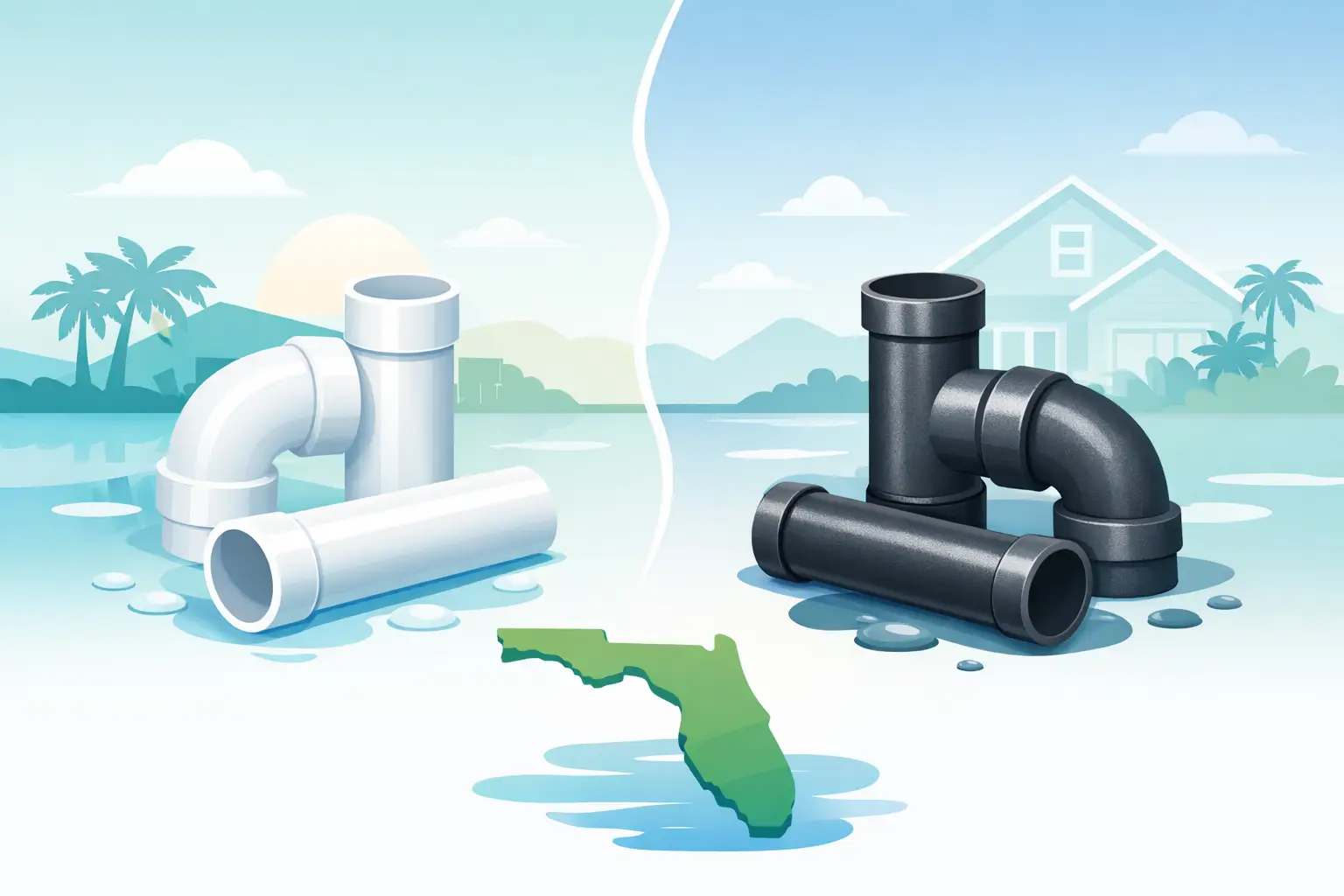
A drain line that works quietly behind the walls is easy to forget – until a backup, leak, or sewer odor interrupts the day. When comparing pvc versus cast iron pipes, the right choice is rarely about choosing the material with the lowest upfront price. It is about the condition of your existing plumbing, where the pipe will be installed, local code requirements, noise concerns, and how long you plan to keep the property.
For Central Florida homeowners, landlords, and property managers, this decision often comes up during a bathroom remodel, sewer repair, repurchase inspection, or recurring drain problem. Both materials have a place in plumbing systems. Knowing where each one performs best can help you make a repair or replacement decision with fewer surprises.
PVC Versus Cast Iron Pipes: The Core Difference
Cast iron is a heavy metal pipe that has been used in residential drain, waste, and vent systems for generations. Many older Florida homes and commercial buildings still have cast iron drain lines, particularly beneath slabs and inside walls. It is known for its strength and ability to reduce the sound of running water.
PVC, or polyvinyl chloride, is a lightweight plastic pipe commonly used for modern drain, waste, and vent plumbing. It does not rust, is easier to cut and install, and is widely available. Most new residential drain installations use PVC because it is durable, code-approved for many applications, and generally less expensive to install than cast iron.
Neither material is automatically better in every situation. A new construction project has different needs than a 1950s home with original under-slab drain lines. A repair that connects to existing cast iron may require a different approach than a full repipe.
Lifespan and Corrosion Resistance
The biggest practical difference between PVC and cast iron is how they age. Cast iron can last for decades, but it is vulnerable to corrosion. Over time, the inside of the pipe can develop scale, rust, and rough surfaces that catch waste and slow drainage. In Central Florida, moisture, soil conditions, and years of use can contribute to deterioration, especially in buried pipe.
A cast iron pipe may look acceptable from the outside while its interior is badly corroded. This is one reason a professional sewer camera inspection matters before making a major repair decision. The inspection can reveal cracking, channeling at the bottom of the pipe, offsets at joints, root intrusion, or buildup that cannot be solved with routine drain cleaning alone.
PVC does not corrode or rust. Its smooth interior helps wastewater move efficiently and makes it less likely to develop the type of internal scaling common in aging cast iron. PVC can still crack, shift, or fail if it is poorly installed, exposed to physical damage, or affected by a serious foundation or soil movement issue. Its resistance to corrosion does not make installation quality any less important.
Cost Is More Than the Price of Pipe
PVC typically costs less than cast iron, both for material and labor. It is lightweight, easier to transport, and faster to assemble using solvent-welded fittings. For an accessible replacement in a crawl space, wall, or open renovation area, PVC can be a cost-effective long-term solution.
Cast iron is heavier and requires more labor to cut, support, and install correctly. That can increase the cost of a new installation or replacement. However, the pipe material is only one part of the estimate. Access often has a larger impact on the total project cost.
For example, replacing a damaged line beneath a concrete slab may involve locating the failure, opening flooring or concrete, excavating, repairing the pipe, and restoring the affected area. In some cases, trenchless sewer repair may reduce disruption, depending on the pipe condition and layout. The best option should be based on an inspection and a clear estimate, not a guess from the surface.
Noise: Where Cast Iron Still Has an Advantage
Cast iron has a clear advantage when quiet operation is a top priority. Its mass dampens the sound of wastewater moving through vertical stacks and drain lines. In a multi-story home, condominium, office, or building with bedrooms near plumbing walls, that difference can be noticeable.
PVC carries more sound because it is lighter. Water flowing through a PVC stack can create a sharper noise, particularly when a toilet flushes from an upper floor. This does not mean PVC is unsuitable for these spaces. Proper pipe support, insulation, sound-rated wall assemblies, and thoughtful routing can reduce noise significantly.
If you are remodeling a home and want the quietest possible plumbing near sleeping areas, cast iron may be worth considering for certain vertical sections. If budget, corrosion resistance, and efficient installation are the larger priorities, PVC is often the practical choice.
Strength, Movement, and Installation Quality
Cast iron is exceptionally rigid and handles compressive loads well when supported correctly. That strength can be valuable in certain commercial or high-traffic applications. Its weight, however, means installers must use proper hangers and connections. A poorly supported cast iron line can sag or create stress at joints.
PVC is easier to work with, but it expands and contracts more with temperature changes. Drain piping must be properly sloped, supported at the right intervals, and connected with the correct fittings. Glue joints need proper preparation and curing. Small installation mistakes can lead to leaks, standing water in the line, recurring clogs, or premature failure.
This is why the question should not only be, “Should I use PVC or cast iron?” It should also be, “What is causing the current problem, and what repair method will prevent it from returning?” A reliable plumber should explain both before work begins.
When It Makes Sense to Keep Cast Iron
Not every cast iron system needs replacement. If a camera inspection shows the pipe walls are intact, joints are stable, and the line is draining properly, targeted maintenance or a limited repair may be enough. Replacing sound pipe simply because it is old can create unnecessary expense.
Keeping cast iron may also make sense when only a short section needs attention, when noise control is especially valuable, or when the existing system is performing well. In those cases, a licensed plumber can use approved transition couplings to connect new PVC sections to existing cast iron where allowed.
The key is to base the decision on the actual condition of the line. Repeated backups, sewer odors, leaks beneath flooring, slow drains throughout the building, or sections of pipe that have collapsed are signs that a more comprehensive solution may be needed.
When PVC Is Usually the Better Replacement Choice
PVC is often the preferred material for replacing failed residential drain lines, particularly when corrosion is the underlying problem. It is a strong option for bathroom additions, kitchen drain upgrades, vent piping, and many sewer line repairs. It is also well suited to properties where owners want lower material costs and a pipe that will not rust from the inside out.
For a whole-home drain system replacement, PVC can provide a clean start when aging cast iron has widespread deterioration. That does not always mean every section must be removed. A professional evaluation can identify whether the issue is isolated to one branch line, limited to under-slab piping, or present throughout the system.
Local building codes and the specific application still matter. Drain, water supply, gas, and exterior piping each have different material requirements. PVC is not a substitute for every type of pipe, and a licensed installer should select materials that fit the job and meet code.
A Clear Inspection Should Come Before a Big Decision
The most expensive mistake is replacing pipe based on assumptions. A slow drain might be caused by buildup, a localized break, roots, a belly in the line, or widespread corrosion. Those problems can look similar from inside the home, but they require different solutions.
Before committing to a repair, ask for a clear explanation of what the inspection found, where the problem is located, what options are available, and what disruption each option may involve. For homeowners and property managers, that transparency makes it easier to compare immediate cost with the likelihood of future repairs.
At The Flush Club, the goal is not to push a one-size-fits-all replacement. It is to identify the source of the plumbing problem and provide a straightforward path to a lasting repair. Whether your property needs a targeted cast iron repair, PVC replacement, or a closer look at a recurring drain issue, the right answer starts with seeing what is happening inside the line.